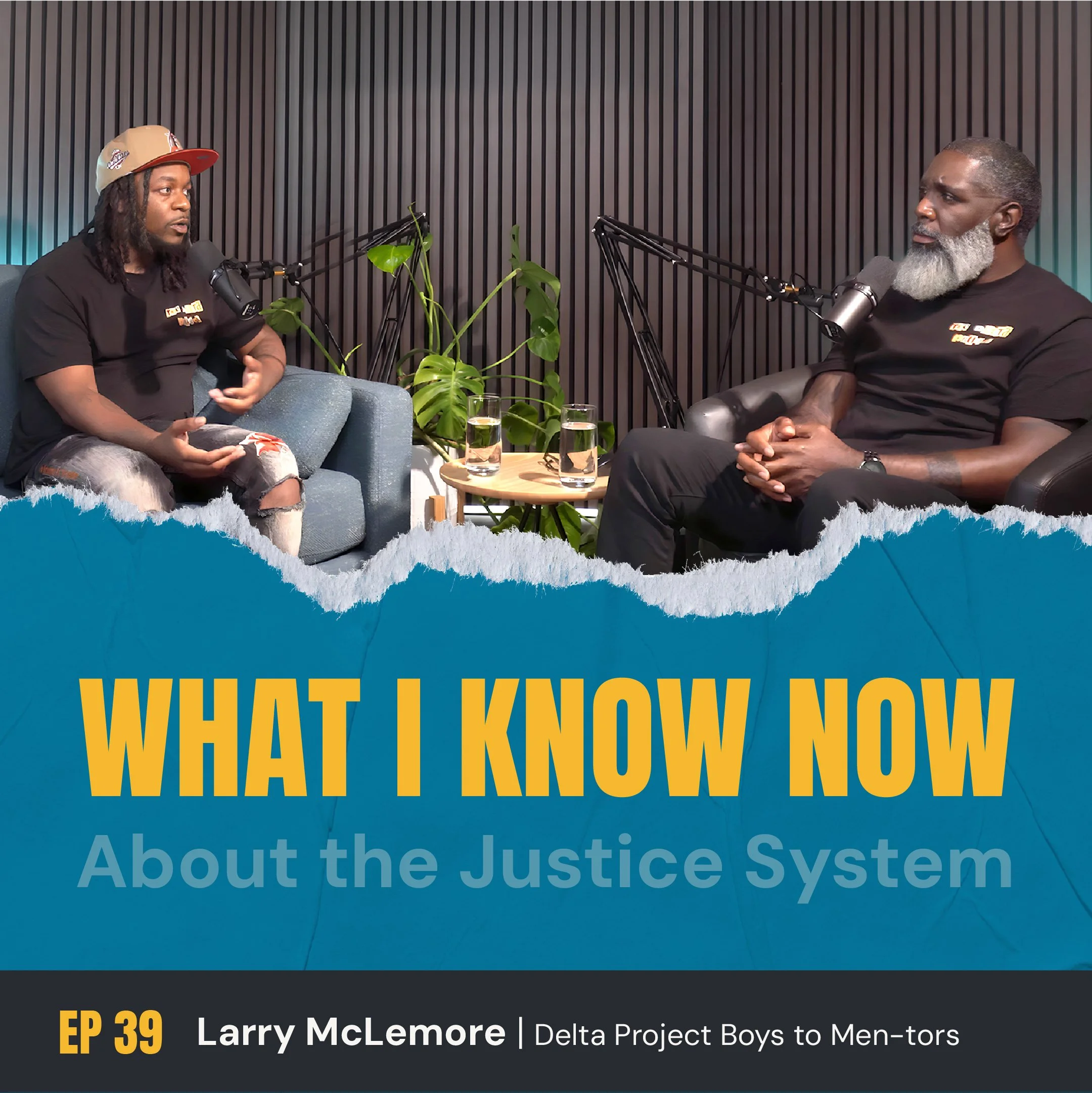
In this episode of season 3, we focused on the powerful story of Larry McLemore, a mentor with The Delta Project and a violence interrupter at Cure Violence. This episode sheds light on the realities faced by young people impacted by the juvenile justice system and highlights the transformative power of authentic mentorship, or as we like to call it, “Lived Experience Mentorship.”
A key theme that emerged was Larry’s lived experience navigating the juvenile justice system, beginning with his first contact at age 13 for probation violations and culminating in being charged as an adult at 17. The discussion explored how the environment inside juvenile detention was often normalized—and even seen as “sweet” by some youth—due to familiar faces and a sense of belonging, while others experienced it as punishment due to bullying and isolation.
One concept discussed was the transferability of skills learned in sports, such as leadership and brotherhood, into street life—a double-edged sword that both provided support and contributed to negative decision-making. Larry reflected on how those same leadership skills now fuel his work as a mentor and violence interrupter, helping youth find different paths and opportunities outside the street norm.
Larry discusses many things, including the barriers formerly incarcerated individuals face when seeking employment, the importance of changing community norms, and the need for exposure to alternative activities like fishing and camping that can shift youth perspectives. The discussion highlighted the vital role of visibility and relatability in mentorship—the idea that lasting change often requires support from someone who truly understands a young person’s background and experiences.
Larry also spoke candidly about his journey of self-discovery, healing, and fatherhood after release from incarceration. He emphasized the challenges of adapting to life on the outside, the importance of belonging, and the responsibility to help young people avoid the pitfalls he once faced. The episode concluded with uplifting advice for youth: seek peace within yourself, embrace real love and support when it is present, and don’t be afraid of change.
This episode is a must-listen for anyone interested in juvenile justice reform, the importance of authentic mentorship, and the impact of lived experience on empowering future generations to break cycles of incarceration and violence.
Listen to the full episode to learn how mentorship, resilience, and community support can change the lives of system-impacted youth.