
WHEN THE ANSWERS DON’T COME
Grief, questions, and the stories that keep young Black and brown men alive - By Cole Williams, Executive Director and Co-Founder, The Delta Project
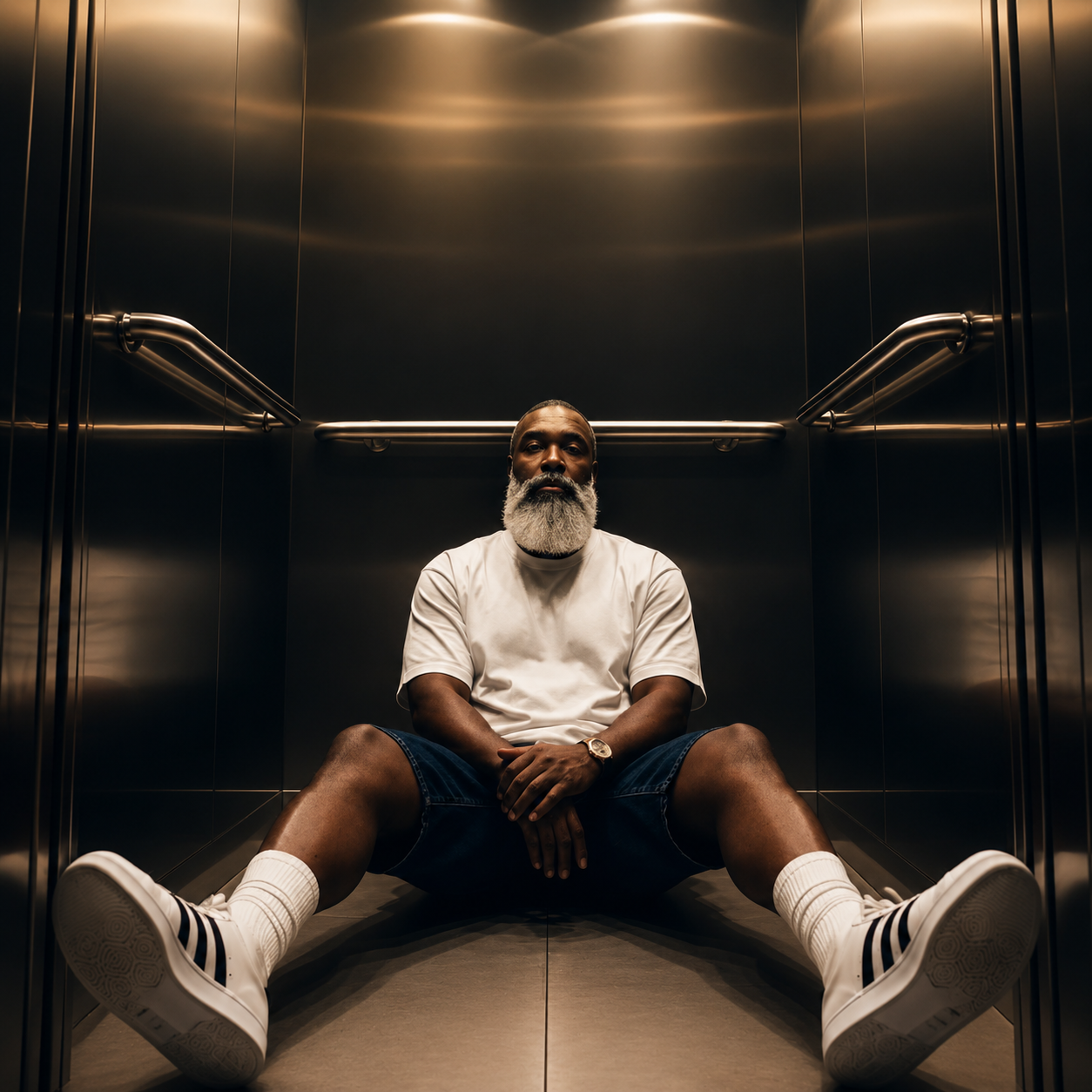
Cole Williams, Executive Director contemplating this story
I am expecting the young men in my circle to bring up Nolan Wells.
Maybe not by name, and maybe not directly. It may come as a question about the news. It may come sideways, in a joke that is not really a joke about boat trips and who you go with. But it is coming. An eighteen-year-old wide receiver goes to an island with his friends on the Fourth of July and does not come home, and every young Black man in this country who saw that story felt something move in his chest before a single fact was confirmed.
I already hear it and see it among my contemporaries. Grown men turning the story over after meetings, in group texts, in the quiet at the end of phone calls. But I know from personal experience that what the grown men are saying and what the young men are holding are two entirely different conversations, and most of the time they happen in different rooms. My generation talks at the issue. We analyze it, we debate it, we name the communal pain and pass it back and forth like something we can manage from a distance. Meanwhile the young men who see themselves in Nolan are sitting somewhere else, holding it alone.
I have spent my life trying to close the distance between those two rooms. That is what The Delta Project is at its heart: a space I helped build in the hope that I could be one of the people who brings a community together, with the power of storytelling and love, somewhere safe enough to say the hard thing out loud.
That is the conversation I am preparing to have in that room, with young men who are grieving a stranger who could have been them, looking for answers in a moment when the answers have not arrived. I have sat in a lot of hard rooms. I have sat with fathers behind bars and with boys in detention. These conversations do not get easier. But they are becoming more necessary. So let me share how we break this down, because parents, mentors, coaches, and teachers across this country are facing the same silence at their own kitchen tables.
Mentally, we hold two truths at once. The first truth: Your fear is not paranoia. It is inheritance. Black families in this country have buried too many sons under circumstances that were explained too quickly, and the instinct to ask harder questions was earned across generations. When a young man tells me the story scares him, I do not talk him out of it. I tell him his feelings are reading history correctly. The second truth: we do not let our pain write facts that have not been established. We can demand a full and honest investigation, stand with a grieving family, and still refuse to hand our minds over to speculation. Certainty without evidence is not strength. It is another way of losing control of the story. Holding both truths is hard, disciplined work. It is also what maturity in grief looks like, and our sons are capable of it when the adults around them model it.
Physically, we let the grief be in the body, because that is where it lives. Watch a young man scrolling a trending name that looks like his own. His shoulders are up. His sleep is short. His jaw is tight in a way he cannot explain. Grief and hypervigilance are not ideas. They are heart rate and appetite and the exhaustion of being on alert in your own country. So we move. We get young men in rooms together where the body can settle. We eat together. We name what the body is doing, out loud, so a young man learns that shaking hands are information and not weakness. A young man who knows what fear feels like in his body is harder to overwhelm and harder to manipulate. That is not soft. That is survival training of the oldest kind.
Narratively, we take the pen back. Here is what I most need people to understand. In marginalized communities, storytelling is not decoration. It is survival. It always has been. Our people carried freedom in songs, carried maps in stories, carried whole family histories in the space between a grandmother’s sentences, because the official record was never written for us or by us. When you have been narrated by others, telling your own story is how you stay alive and whole.
That is why what is happening around Nolan’s death matters beyond the investigation. A young man’s name is being pulled in every direction by strangers with platforms, and his family is trying to grieve inside that noise. Whatever the facts turn out to be, the people closest to him deserve to lead the telling. And every young man watching is learning a lesson about what happens to your story when you are no longer here to tell it.
The Delta Project began with a question a student in detention asked me in 2017: How do I become something I don’t see? Our answer, from the first day, was to put the tools of storytelling into young men’s hands. We brought cameras into a juvenile detention center so the young people inside could author themselves instead of being authored by a case file. See the child before the case, the family before the file. A young man who can tell his own story, in his own voice, has something no system and no news cycle can take from him.
So this is what I will carry into the room when the young men in my circle bring up Nolan Wells. Grieve him. Say his name with care. Stand with his family’s right to answers. Let your body feel what it feels. And then pick up the pen, the camera, the microphone, whatever is in reach, and keep telling your story. Not because it makes the fear disappear. Because it is how our people have always turned surviving into living.
These conversations do not get easier. They are not supposed to. They are supposed to get truer. And they have never been more necessary than they are right now.