
The Economics of Belonging
By Cole Williams, Executive Director and Co-Founder, The Delta Project
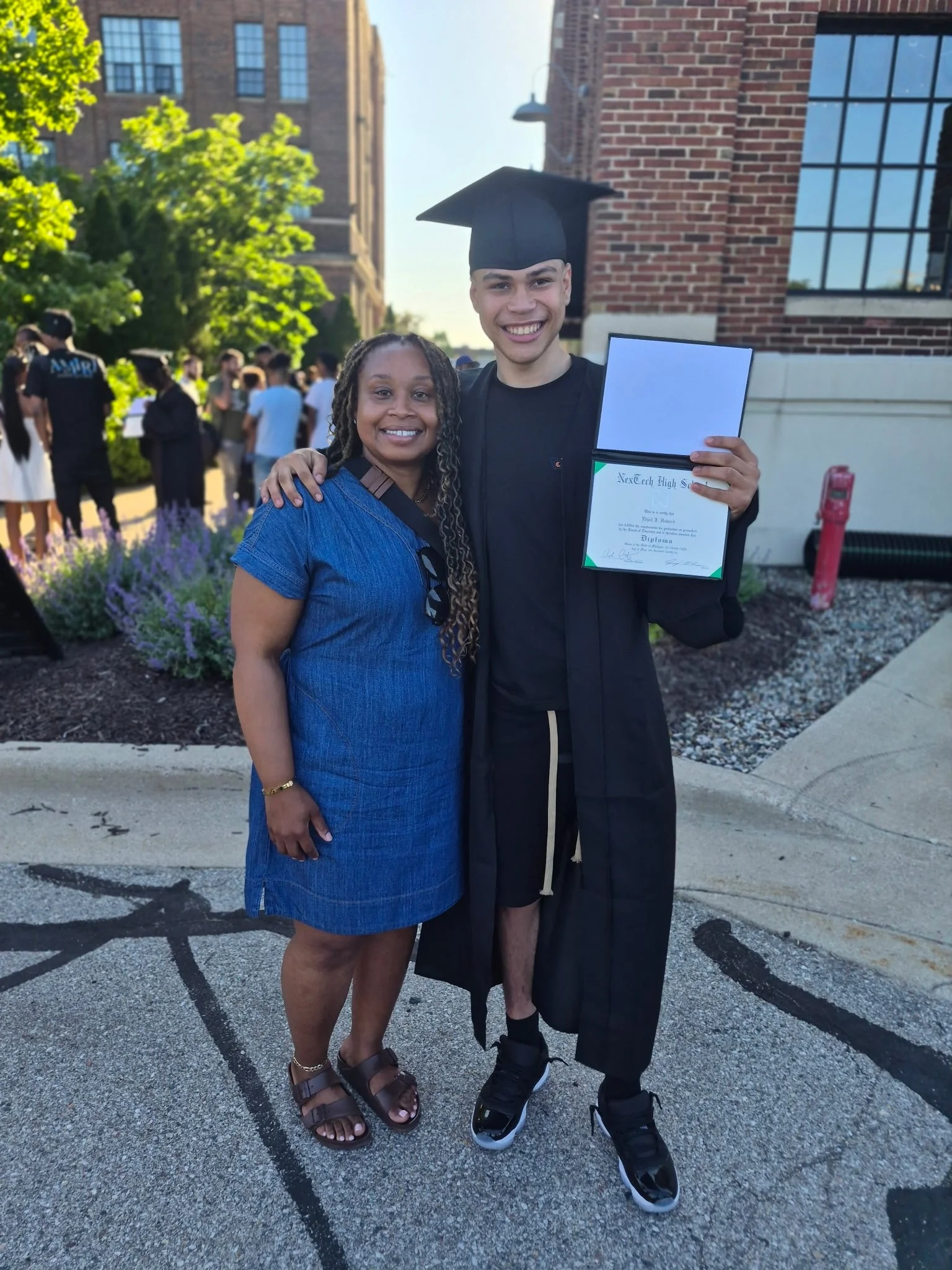
One of our mentees’ graduation from NexTech
Every young person is running a quiet calculation. Do I matter here? Will anybody notice if I am gone? Is there a seat at this table with my name on it? They would never say it that way, but the math runs all the time, in classrooms and courtrooms and in kitchens where the chair across the table has been empty for years. The answer a child lands on shapes everything that comes after.
I know this as a founder. I knew it first as a father. Children do not ask the adults in their lives to be perfect. They ask us to be present, and they keep the books on us more honestly than any auditor ever could. Every time we show up, learn a young man's name and his story, and come back again, we make a deposit into an account he will draw on for the rest of his life. Stay long enough and the trust starts to compound. But when nobody invests, that account does not sit at zero. It goes negative. A young person with no reserve of belonging does not stop taking risks. He takes different ones.
Here is what troubles me about how today's society does its accounting.
We have built a whole economy around the second chance. A startup founder can fail three times, and we call the fourth attempt experience. Investors write checks to people whose last two companies collapsed, because in that world failure is tuition. We fund the comeback.
Then a fourteen-year-old acts out. He does exactly what a boy with an empty account and a still-developing brain is likely to do, and nobody calls his failure tuition. They call it a record. There is no comeback fund waiting for him, just a placement and a file. The same behavior we finance in one zip code, we prosecute in another. The founder and the boy are not different kinds of people. They started with different balances. One was born with belonging on deposit. The other was born in overdraft, and we punish him for terms he never wrote.
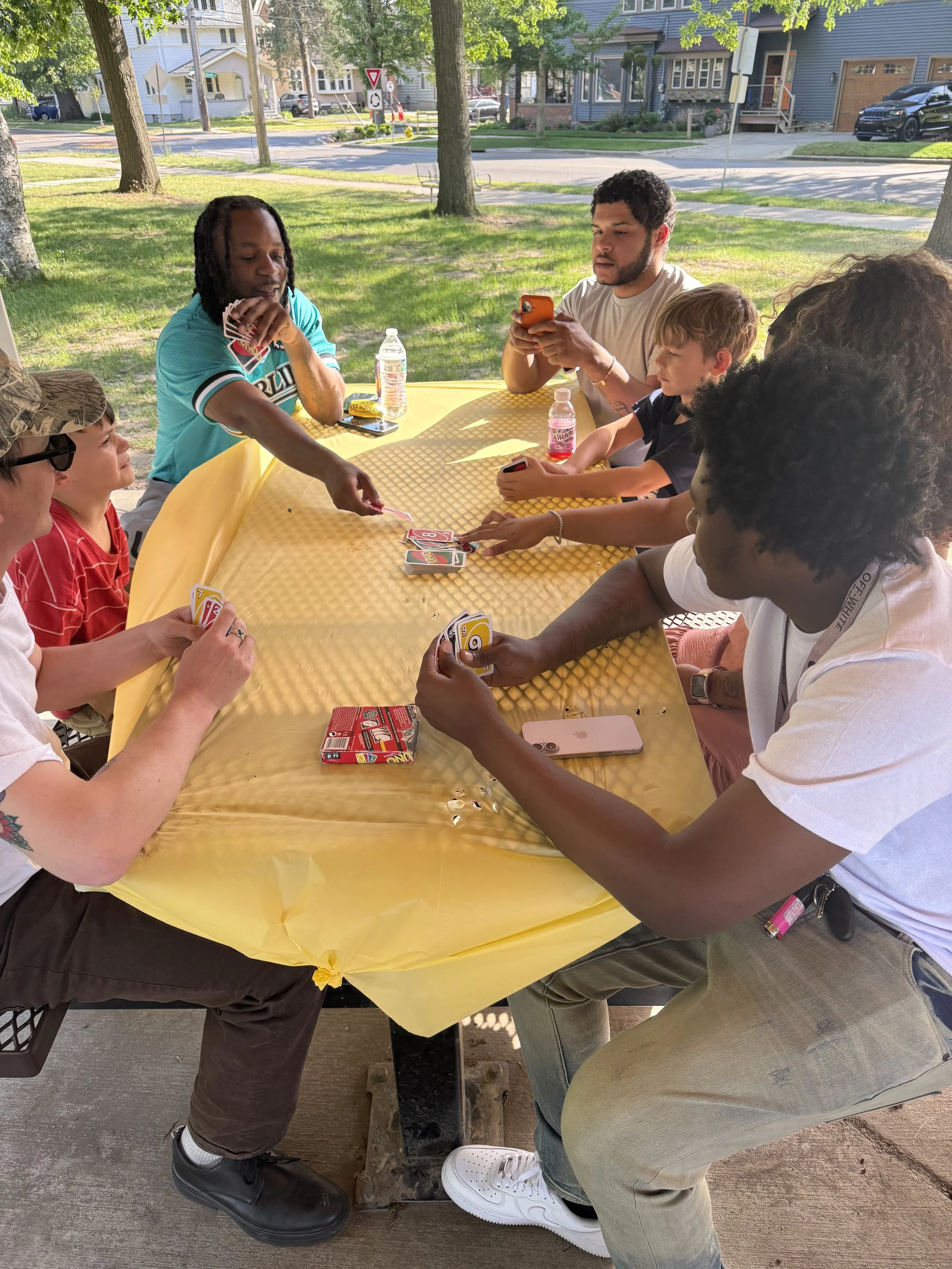
Summar programming gathering at Martin Luther King Park
So how do we make young people feel like they belong? We stop treating belonging like a byproduct and start treating it like infrastructure. Nobody hopes a bridge into existence. You fund it and you maintain it. Belonging gets built the same way, through relationships that hold, adults who return, and rooms where a young man can look up and see himself in somebody who made it through.
Which brings me to the people best positioned to do this work, and what we do to them.
The most credible investors in a young person's belonging are often the men and women who lost their own and fought their way back. A lived experience mentor does not have to imagine the courtroom, the cell, or the long walk home with a record. He has the map because he walked the terrain. And when he sits across from a young man, the calculation changes. Somebody like me made it. Maybe there is a seat for me after all.
Yet the path we make these mentors walk is one of the most restrictive in the helping professions. A felony conviction, sometimes decades old, sometimes earned in the same childhood chaos we now ask them to help other children survive, becomes a barrier at nearly every door. Background checks. Clearances. Licensing rules. Facility restrictions. Most professionals will never comprehend what these men and women navigate just to show up for a child. The experience that qualifies them is the very thing we use to disqualify them.
Sit with what that teaches. We tell a boy his mistake does not have to define him, and then he watches the man mentoring him get turned away at the door for a mistake from twenty years ago. He learns the lesson we actually taught, not the one we meant to.
I am not arguing against safeguards. Children deserve protection, always. I am arguing against a system that preaches redemption and practices exclusion. If we believe in second chances, the proof is not in what we tell young people. It is in who we allow to stand beside them.
At The Delta Project we hold a simple discipline: See the child before the case, the family before the file. The economics of belonging asks one thing more of us. See the deposit before the deficit. Every young person arrives carrying an account, and the balance is not his fault. It is our shared ledger. We can keep paying on the back end, in placements and prosecutions and interrupted lives, or we can invest on the front end, in mentors, in presence, in a seat that stays open at the table.
One of those choices compounds. The other just costs.