The Warmest Thing in the Room
Cole Williams carried a film about Black fathers into New York City on the one weekend that holds both Juneteenth and Father’s Day. Here is what it meant to watch men see themselves.
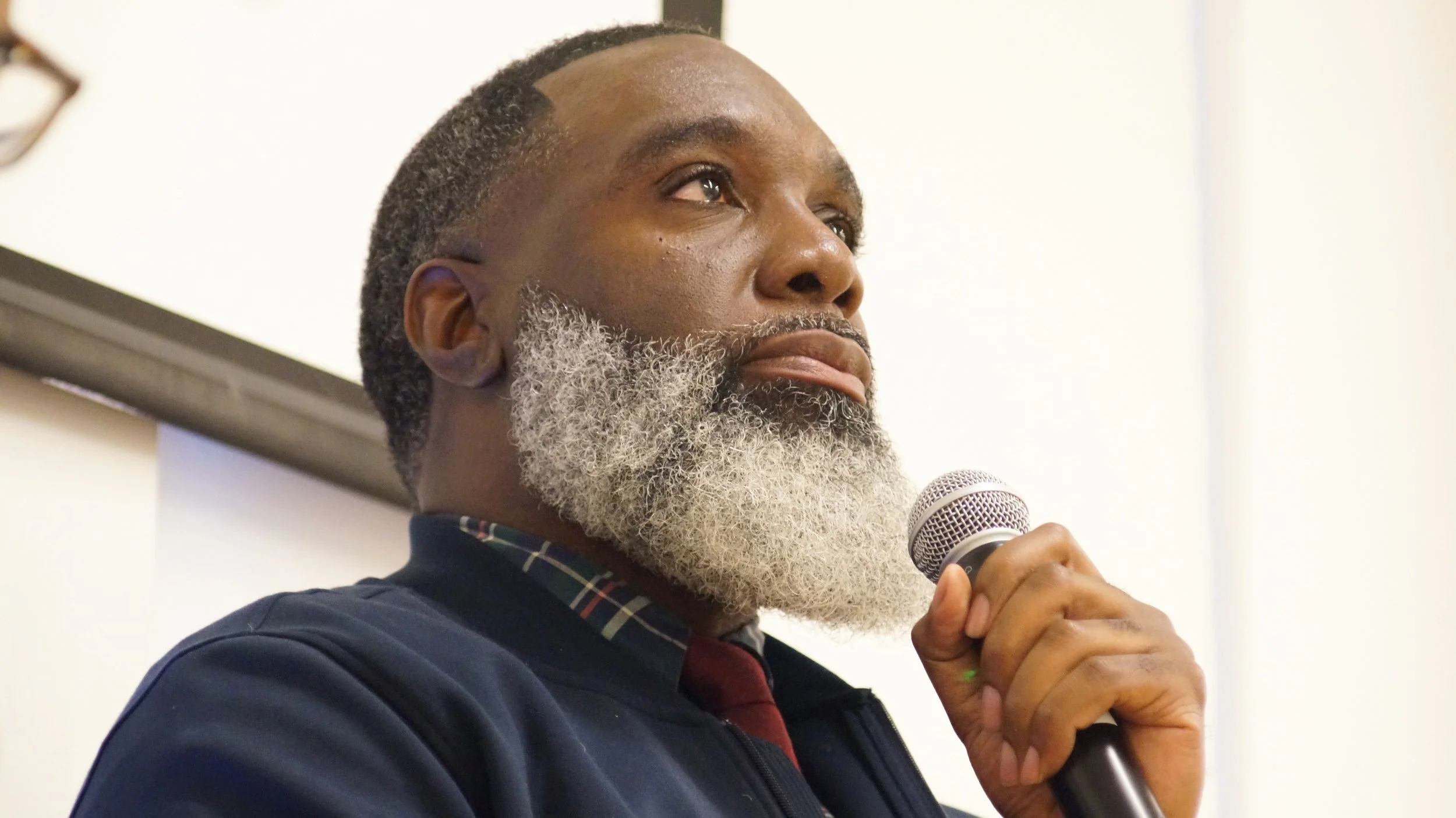
Cole is reflecting on a great question from the audience with misty eyes
On a screen in New York City, a man and a child are holding hands, and you can see the heat coming off their bodies. And the brightest thing in the entire frame, brighter than either face, is the place where the big hand closes around the small one.
In the dark beneath that screen sit two of the actual fathers from the film. They are watching themselves be seen. Somewhere in that same room is Cole Williams, the co-founder of The Delta Project, a man who has raised enough sons to fill a starting lineup, biological, foster and adopted, and who has spent his whole adult life answering a question a boy once asked him from inside a detention center: How do I become something I don’t see?
This is the answer. You take the unseen thing, you project it on a wall in New York, and you turn up the heat until no one in the room can pretend the men aren’t there.
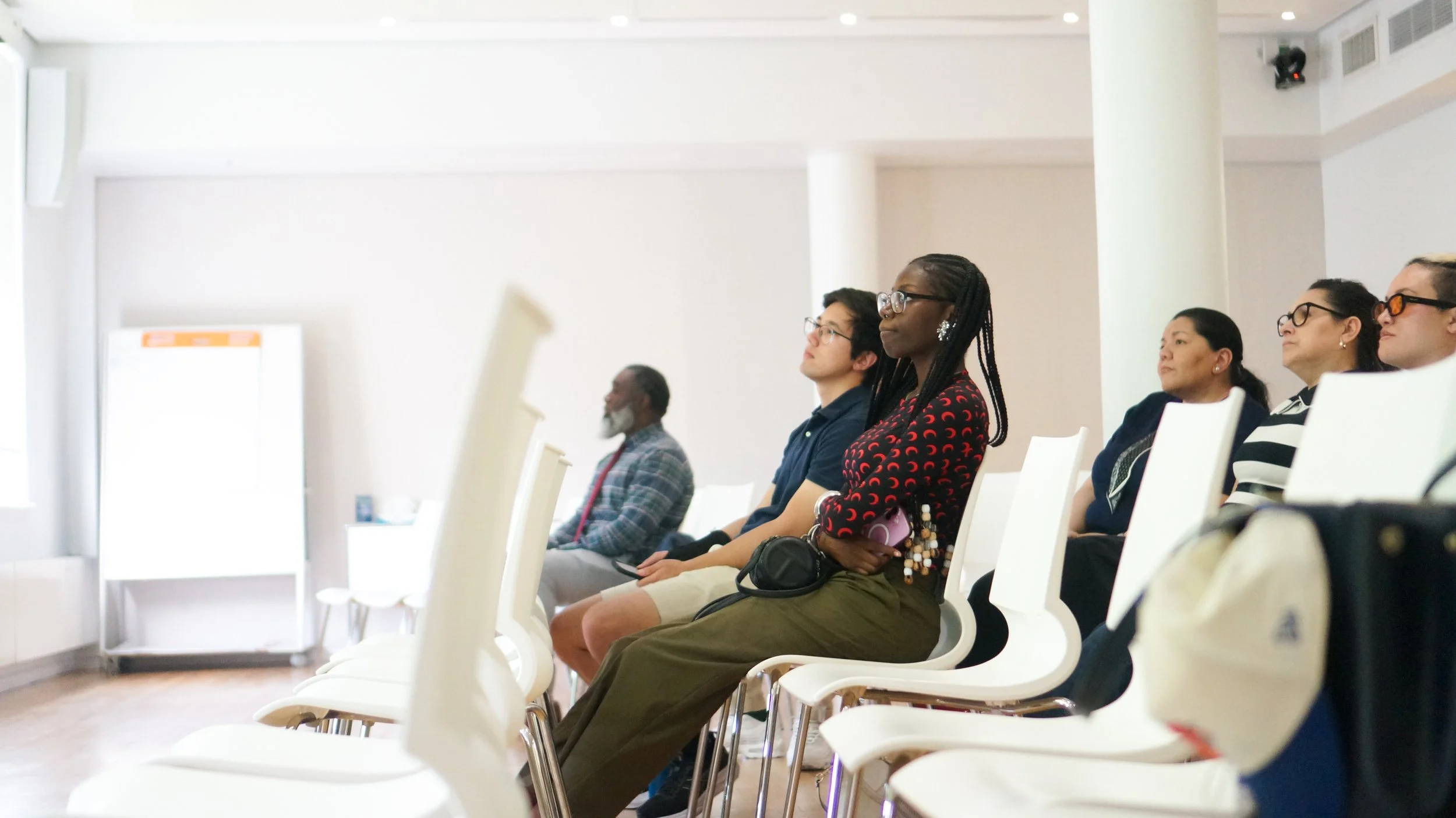
The audience watching the film at Robin Hood
It is Father’s Day weekend. It is also Juneteenth. The Delta Project — a Grand Rapids organization that exists to keep Black boys out of the prison system and inside relationships — flew to New York and walked straight into the space where those two holidays meet, and if you don’t feel the charge in that, you’re not paying attention.
Because both of these days are about the same thing. Juneteenth is the holiday of late freedom — June 19, 1865, the day enslaved people in Galveston, Texas, were finally told a truth that had been true for two and a half years already. An Emancipation Proclamation that existed on paper while the body stayed in chains. Freedom withheld, deferred, dragged out as long as somebody could profit from the delay. And Father’s Day, for Black men in this country, has always carried that same ache of the deferred. The presence that was supposed to be there and got taken, or stayed away, or got removed, because the absence of the Black father in America has never been a natural fact. It is a manufactured one. You write enough policy, you sentence enough Black men, you pull enough of them out of their homes before their children are grown, and you can produce fatherlessness by design. And then turn around and blame the men for the hole you made.
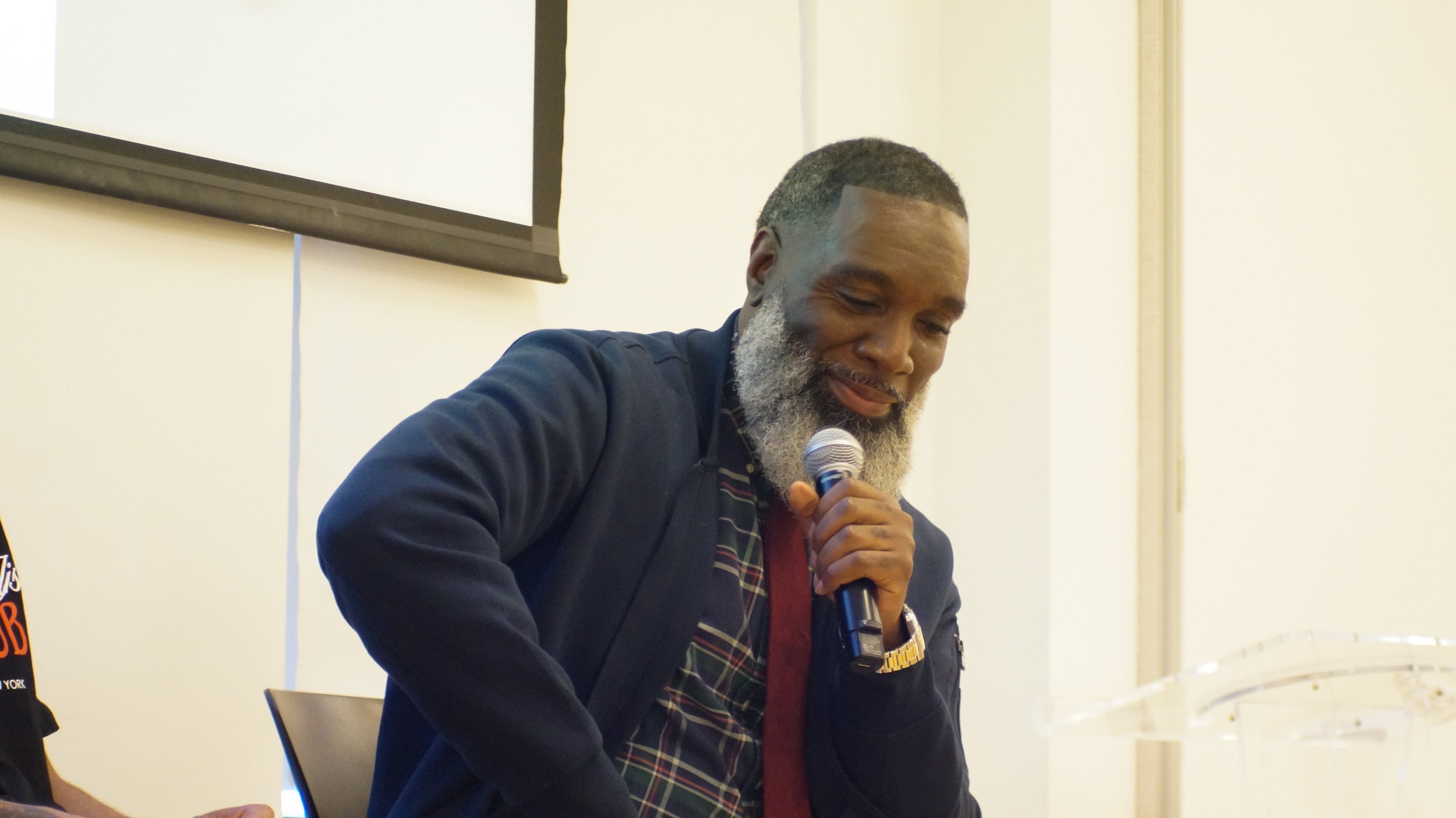
Cole Williams at The Fatherhood Project premiere in New York City with Avenues for Justice
So when The Delta Project premiered The Fatherhood Projectdocumentary film in New York City, leading up to this weekend of all weekends, it was not a film screening. It was an argument. The data has said for years what the culture refuses to hear: that Black fathers who are present are as involved as any father in America, more by some measures, tender in ways the stereotype was specifically engineered to erase.
The Delta Project said the night reminded them why they do the work. Believe them. There is no professional distance available to you when the people on the screen are sitting three rows up, watching their own lives get reflected back and received. That is not content. That is a man being told, in public, that his story counted.
Avenues for Justice invited Cole and The Delta Project into the room because they share a common bond. They sat down with Avenues for Justice, which walks beside young people the system has already gotten its hands on, and with Real Dads Network, which makes room for fathers to come back, heal, and hold onto the relationships somebody tried to sever. Different cities. Different programs. And The Delta Project came out of those rooms saying a thing that should be put on a wall somewhere:
The heart of it felt familiar.
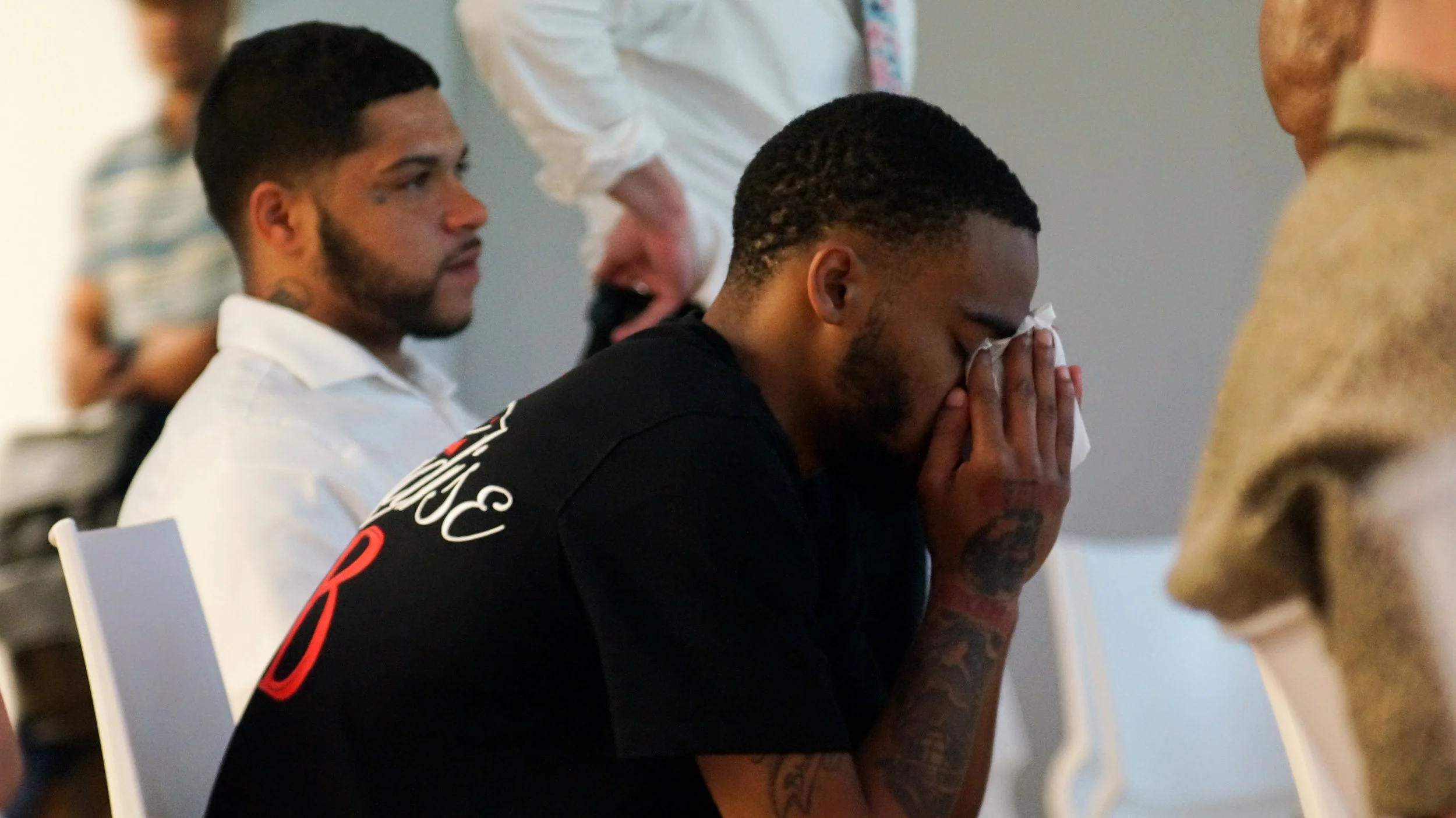
Makari Agnew and Nicholas Dean watching themselves on the screen with evident emotion
It is the shared and stubborn conviction that a person deserves support before he deserves judgment. That a young man is more than the worst hour of his life. That healing and accountability are not enemies — that they have to sit in the same room, at the same table, or neither one is real. Most of America cannot hold those two things at once.
The justice system offers accountability with no healing and calls it consequence. The soft institutions offer healing with no accountability and call it grace. What these organizations have each figured out, separately, six hundred miles apart, without a memo passing between them, is that the truth lives in between where both are true. When three organizations arrive at the same hard answer alone, that is not a coincidence. That is a people remembering something.
Here is what this editorial will not do. It will not tie a bow on it. It will not tell you a weekend in New York fixes anything, because The Delta Project goes home to Grand Rapids and the young people it serves are still caught in the system, and fathers are still being pulled away from their families one ruling at a time. A documentary does not change a sentence. A familiar heart in a Manhattan conference room does not change the rooms back home where these same young men get reduced to a case number before anybody asks their name.
But something traveled this weekend, and it wasn’t a film. It was proof. Proof that the thing Cole Williams has been carrying since that boy in the detention center asked his impossible question — support before judgment, the man past the moment, healing and accountability in the same breath — is not a Grand Rapids eccentricity. It is an inheritance. It is held, right now, by people doing the work in New York with care and consistency and love, on the weekend the whole culture finally agreed to look at Black fathers and Black freedom at the same time.
The Delta Project ended its own account of the trip in three words, and there is nothing to add to them.
The work continues.
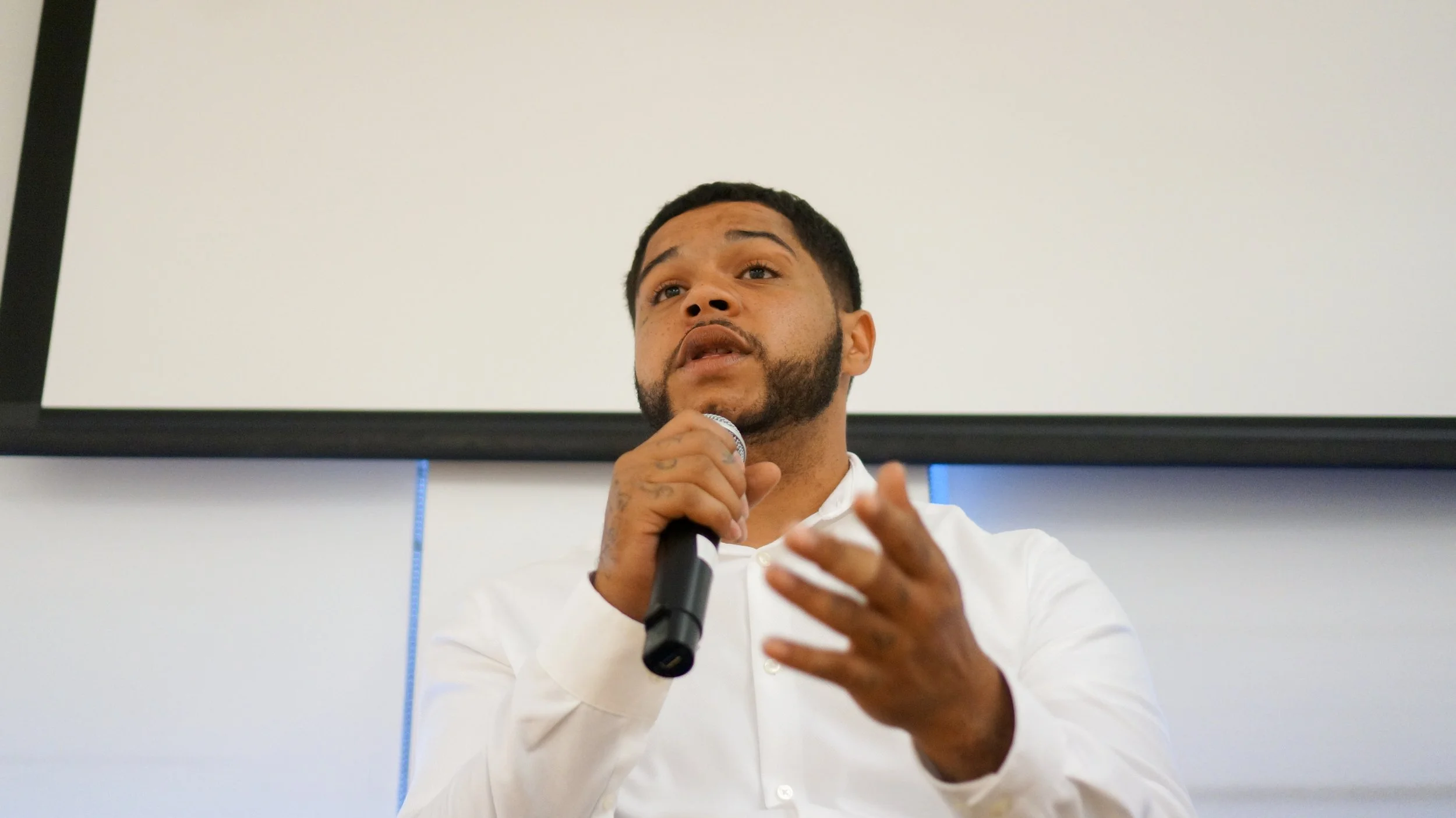
Nicholas Dean answering a question after the film premiere
The hands are still holding. The heat is still coming off them. And somewhere on a flight back home is a man who has spent his life making sure his sons could see, on a screen and in the flesh, exactly what they were allowed to become.
The Delta Project is a Grand Rapids, Michigan, nonprofit working to break the generational cycle of incarceration by reconnecting youth of color and their families to community relationships through mentorship, coaching, and storytelling. Its New York weekend was made possible in partnership with Avenues for Justice, Real Dads Network, and Robin Hood.